Nadi-儿童骑行/福特挑战赛
福特挑战赛
福特挑战赛
UX/UI Designer
UX/UI Designer
组队竞赛
组队竞赛
2024.3-2024.5
2024.3-2024.5
Stage 1. Usability Audit
Initiated the project with a comprehensive usability audit of the existing app, employing heuristic evaluation, user interviews, and performance analytics to identify friction points. This audit revealed significant areas for improvement, particularly in the app's navigation system, goal tracking features, and social engagement mechanisms.
Stage 2. Design Strategy
Formulated a redesign strategy that prioritizes a simplified user flow, enhanced data visualization for goal tracking, and new features to foster community engagement among users. Developed a detailed design roadmap, categorizing changes into short-term fixes and long-term enhancements, to guide the redesign efforts effectively.
Stage 3. Prototype Development
Wireframing: Undertook the redesign of core app screens and user flows, addressing the audit's findings. Emphasized the creation of a more intuitive and goal-oriented user journey, reducing cognitive load and enhancing the overall user experience.
High-Fidelity Prototyping: Leveraged Adobe XD to construct detailed prototypes that brought the new design to life. These prototypes featured a refined aesthetic that aligns with the motivational needs of fitness enthusiasts, showcasing the app's enhanced functionality and interactivity.
User Interface Design: Revamped the app's visual identity, incorporating vibrant colors and dynamic elements that motivate users to engage with their fitness goals actively. Carefully selected typography and iconography that resonated with the app's target demographic, ensuring the interface is not only beautiful but also functional.
Stage 1. Usability Audit
Initiated the project with a comprehensive usability audit of the existing app, employing heuristic evaluation, user interviews, and performance analytics to identify friction points. This audit revealed significant areas for improvement, particularly in the app's navigation system, goal tracking features, and social engagement mechanisms.
Stage 2. Design Strategy
Formulated a redesign strategy that prioritizes a simplified user flow, enhanced data visualization for goal tracking, and new features to foster community engagement among users. Developed a detailed design roadmap, categorizing changes into short-term fixes and long-term enhancements, to guide the redesign efforts effectively.
Stage 3. Prototype Development
Wireframing: Undertook the redesign of core app screens and user flows, addressing the audit's findings. Emphasized the creation of a more intuitive and goal-oriented user journey, reducing cognitive load and enhancing the overall user experience.
High-Fidelity Prototyping: Leveraged Adobe XD to construct detailed prototypes that brought the new design to life. These prototypes featured a refined aesthetic that aligns with the motivational needs of fitness enthusiasts, showcasing the app's enhanced functionality and interactivity.
User Interface Design: Revamped the app's visual identity, incorporating vibrant colors and dynamic elements that motivate users to engage with their fitness goals actively. Carefully selected typography and iconography that resonated with the app's target demographic, ensuring the interface is not only beautiful but also functional.
Nadi-儿童骑行/福特挑战赛
Stage 4. User Feedback & Refinement
Facilitated user testing with a diverse group of app users, gathering insightful feedback on the redesign. This phase was crucial in identifying unforeseen usability issues and validating the effectiveness of the new design elements. Iterative refinements were made based on this feedback, fine-tuning the app's interface to maximize user satisfaction and engagement.
Stage 5. Implementation & Launch Support
Collaborated closely with the development team to ensure a smooth transition from design to implementation. Provided ongoing support and guidance during the development phase, addressing any design-related challenges that arose. Played a key role in the app's successful relaunch, monitoring user feedback and engagement post-launch to inform future updates.
Stage 4. User Feedback & Refinement
Facilitated user testing with a diverse group of app users, gathering insightful feedback on the redesign. This phase was crucial in identifying unforeseen usability issues and validating the effectiveness of the new design elements. Iterative refinements were made based on this feedback, fine-tuning the app's interface to maximize user satisfaction and engagement.
Stage 5. Implementation & Launch Support
Collaborated closely with the development team to ensure a smooth transition from design to implementation. Provided ongoing support and guidance during the development phase, addressing any design-related challenges that arose. Played a key role in the app's successful relaunch, monitoring user feedback and engagement post-launch to inform future updates.

有一定的可持续意识
这类家庭物质生活已经得到满足,开始追求精神世界,比起不太富裕的家庭,他们更有可能为可持续未来做出贡献。
这类家庭物质生活已经得到满足,开始追求精神世界,比起不太富裕的家庭,他们更有可能为可持续未来做出贡献。
在意社区形象
这类家庭关注自己,也关注社区,有更多的介入机会。
这类家庭关注自己,也关注社区,有更多的介入机会。
儿童家庭
有机会培养下一代的可持续发展意识。
有机会培养下一代的可持续发展意识。
家庭基数相对多
比起更加成熟、富裕的家庭,这类家庭的数量相对更多,用户量更多。
比起更加成熟、富裕的家庭,这类家庭的数量相对更多,用户量更多。
Outcomes
The redesigned fitness tracker app received overwhelmingly positive feedback from users, who praised its improved usability, engaging design, and motivational features. The project was a significant learning opportunity, enhancing my understanding of user-centric design principles and the impact of design on user behavior and app retention.
Outcomes
The redesigned fitness tracker app received overwhelmingly positive feedback from users, who praised its improved usability, engaging design, and motivational features. The project was a significant learning opportunity, enhancing my understanding of user-centric design principles and the impact of design on user behavior and app retention.
积极的
有一定可持续意识;有足够的资金可以投入家庭
有一定可持续意识;有足够的资金可以投入家庭
+
消极的
不希望家庭有较大的改变,如果改变会影响他们的生活质量,他们更倾向于维持现状;缺乏时间
不希望家庭有较大的改变,如果改变会影响他们的生活质量,他们更倾向于维持现状;缺乏时间
调研资料来源: Gengame's Smart Energy Savings (SENS) project
调研资料来源: Gengame's Smart Energy Savings (SENS) project
案例分析
Teho
专注推广安装节能设备
初期付出成本高,阻碍大
APP无法长期留存用户
Teho
专注推广安装节能设备
初期付出成本高,阻碍大
APP无法长期留存用户
POPOW
没有考虑下一代参与
每周挑战系统
没有把握住培养下一代环保意识的机会
没有提供明确的指示帮助用户达成目标,仅关注节能行为。
POPOW
没有考虑下一代参与
每周挑战系统
没有把握住培养下一代环保意识的机会
没有提供明确的指示帮助用户达成目标,仅关注节能行为。
Ecohour
用户管理过多,耗费精力大
每周挑战系统
关联了朋友和孩子,但用户需自行发起任务、奖励,用户操作内容很多,耗费精力
Ecohour
用户管理过多,耗费精力大
每周挑战系统
关联了朋友和孩子,但用户需自行发起任务、奖励,用户操作内容很多,耗费精力
痛点
痛点
用户需求
用户需求
时间少
时间少
需要融入现有生活,最少花费额外精力
需要融入现有生活,最少花费额外精力
不太清楚可以做什么
不太清楚可以做什么
需要直观的行动指示
需要直观的行动指示
在可持续努力中感到孤独,缺乏成就感
在可持续努力中感到孤独,缺乏成就感
需要与他人交流可持续努力,获得激励和成就感
需要与他人交流可持续努力,获得激励和成就感
有限的周末活动难以满足社交和教育需求
有限的周末活动难以满足社交和教育需求
需要丰富的周末活动,满足社交和孩子成长的需求
需要丰富的周末活动,满足社交和孩子成长的需求
设计挑战:在鼓励儿童参与的同时不增加家长的管理负担
设计挑战:在鼓励儿童参与的同时不增加家长的管理负担
设计挑战:在鼓励儿童参与的同时不增加家长的管理负担
用户需求:需要直观的行动指示
用户需求:需要直观的行动指示
用户需求:需要直观的行动指示
用户需求:需要融入现有生活,最少花费额外精力
用户需求:需要融入现有生活,最少花费额外精力
用户需求:需要融入现有生活,最少花费额外精力
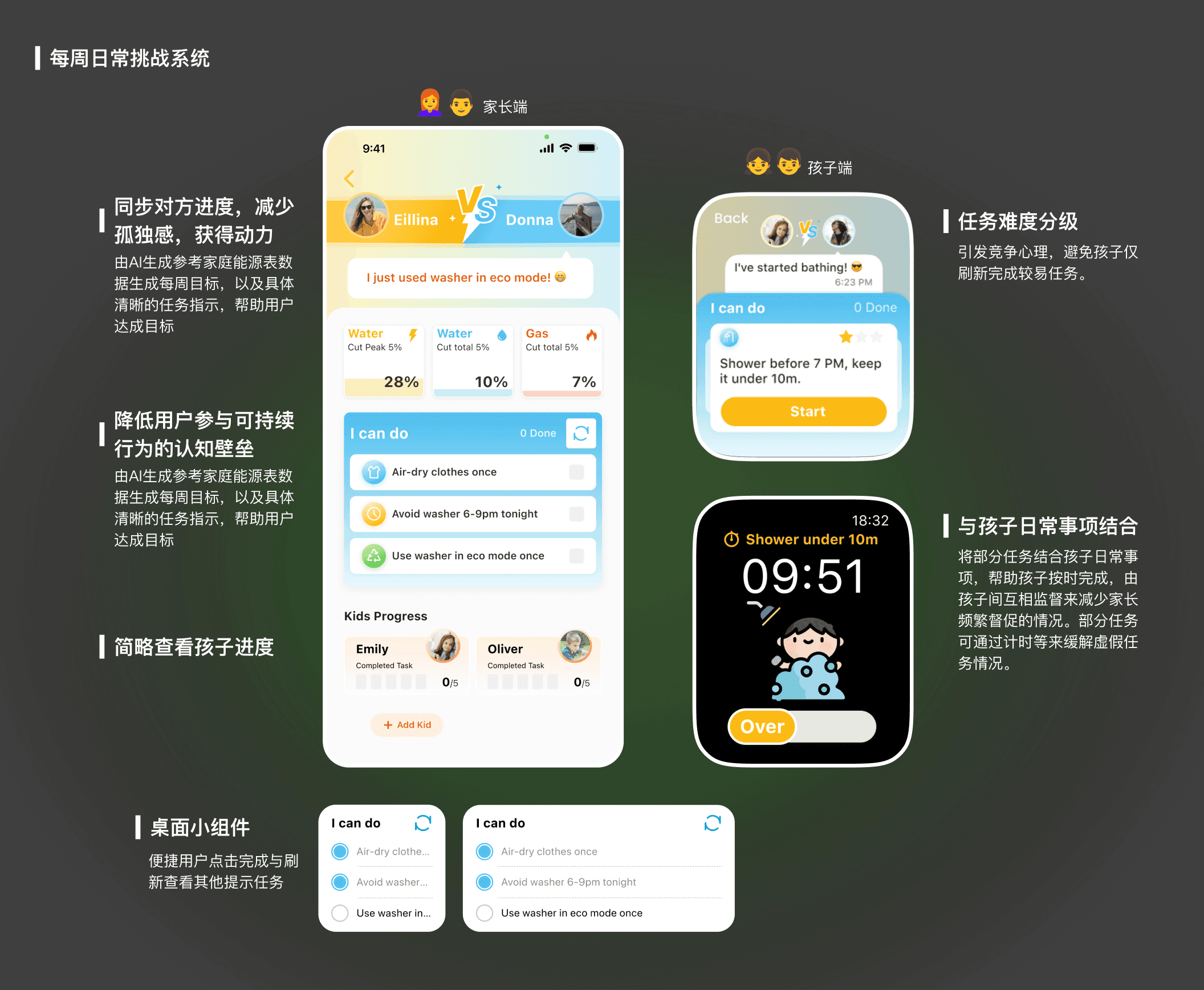
每周挑战系统(家长与孩子)
具体清晰的行动指示
每周挑战系统(家长与孩子)
具体清晰的行动指示
业务目标:重新设计智能电表应用
业务目标:重新设计智能电表应用
业务目标:重新设计智能电表应用
水/电/气数据显示
水/电/气数据显示
业务目标:减少家庭能耗
业务目标:减少家庭能耗
业务目标:减少家庭能耗
节能设备管理与推广
节能设备管理与推广
用户需求:家庭对周末活动的强需求
用户需求:家庭对周末活动的强需求
用户需求:家庭对周末活动的强需求
组织推广可持续周末活动
组织推广可持续周末活动
用户需求:从可持续努力中获得成就感
用户需求:从可持续努力中获得成就感
用户需求:从可持续努力中获得成就感
排行榜、积分奖励商店等
排行榜、积分奖励商店等
功能架构
对以上主要功能做进一步的梳理
功能架构
对以上主要功能做进一步的梳理
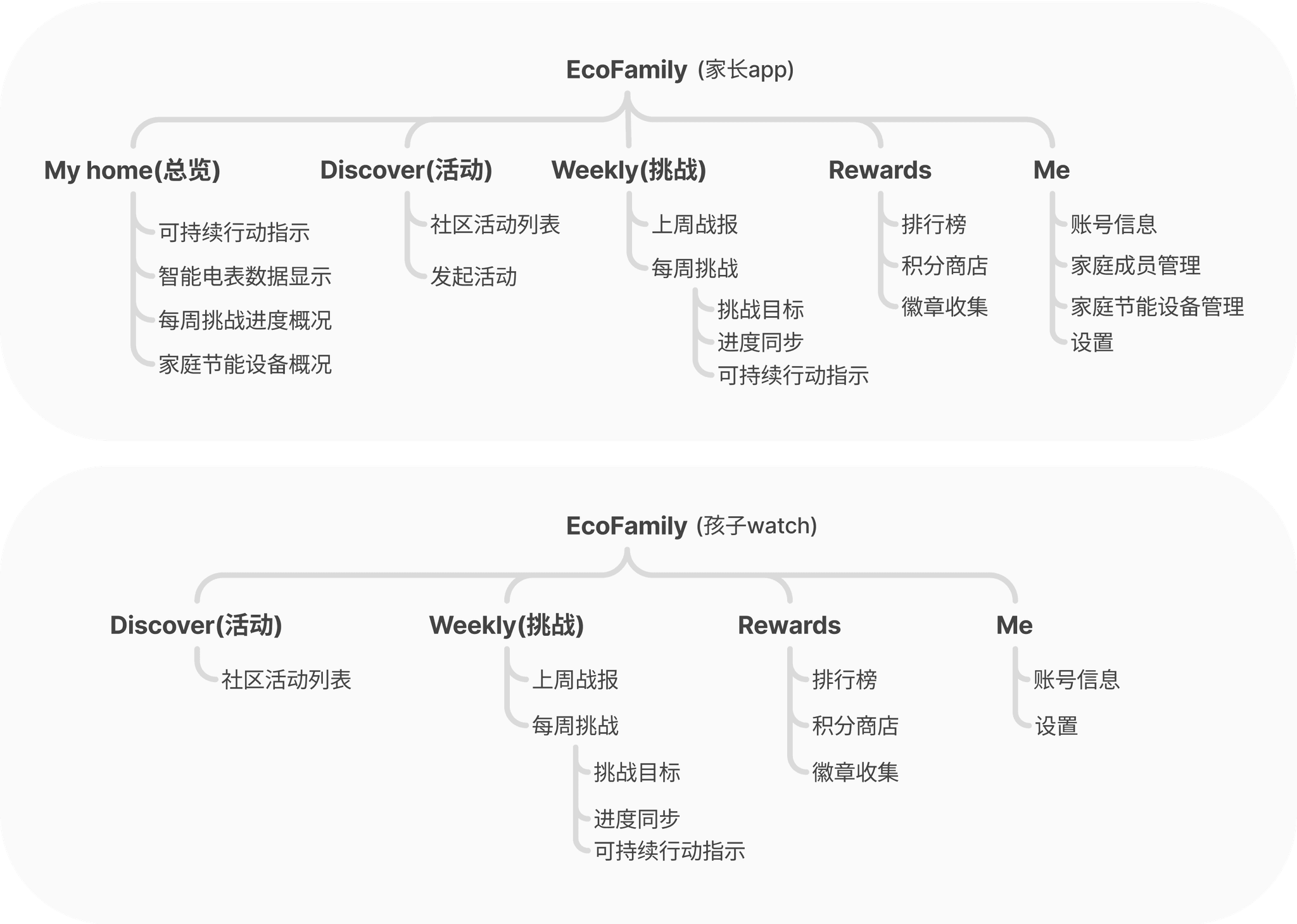
由于时间有限,我根据用户需求的紧迫性和对产品目标的重要性,对主要功能进行了优先级考虑,选择先进行每周挑战系统的设计。
由于时间有限,我根据用户需求的紧迫性和对产品目标的重要性,对主要功能进行了优先级考虑,选择先进行每周挑战系统的设计。
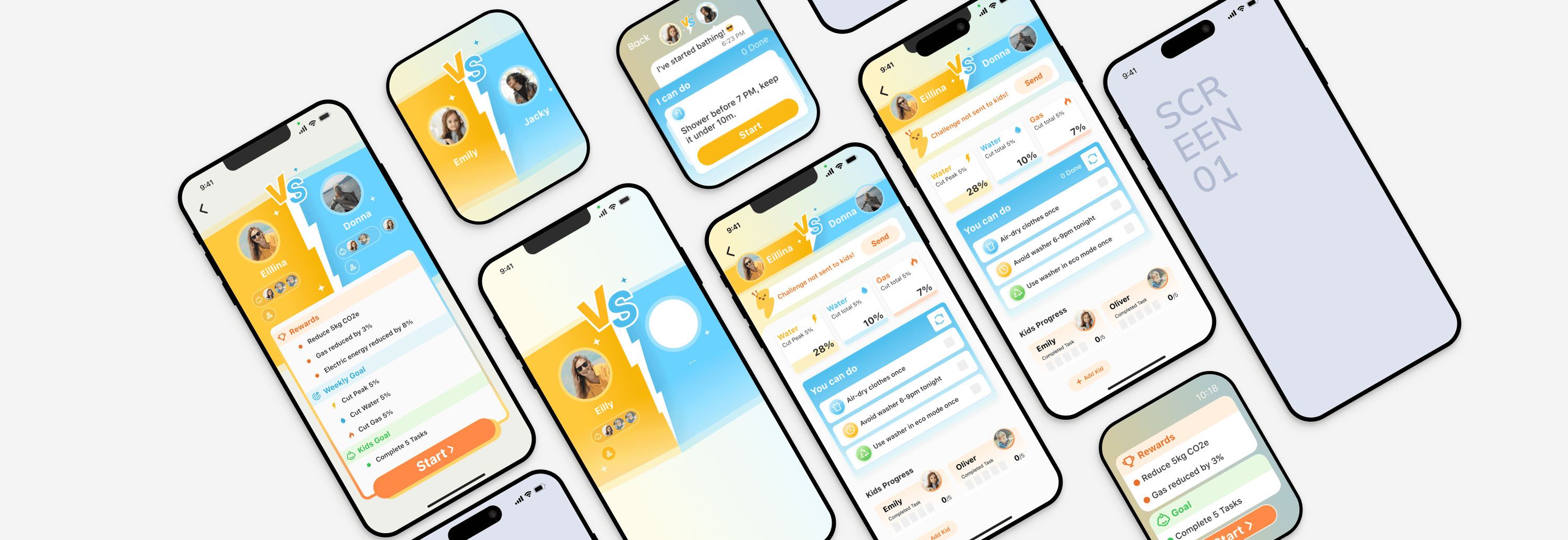
设计方案一
每周挑战系统: 促进家长与孩子在日常参与可持续努力
设计挑战 :‘如何在鼓励儿童参与可持续努力的同时不增加家长的管理负担?’
设计方案:每周日常挑战 ‘以社区内亲子家庭间PK的形式, 家长间\孩子间对应PK’
既带动孩子参与,同时让孩子间互相PK监督,避免增加家长的管理压力。达成了让孩子和父母共同参与可持续活动。并通过知晓其他家庭的动态,从而减少孤单感。最终增强社区在可持续努力上的氛围。
为了初步验证设计方案,我进行了lo-fi测试收集用户反馈。由于时间限制,我无法接触到真实的目标家庭,因此通过获取UX同学和老师的反馈以帮助迭代。
为了初步验证设计方案,我进行了lo-fi测试收集用户反馈。由于时间限制,我无法接触到真实的目标家庭,因此通过获取UX同学和老师的反馈以帮助迭代。
Lo-fi测试反馈及过程
Lo-fi测试反馈及过程
通过lofi反馈,我确认了设计方案的整体方向是正确的。接下来,我结合反馈和我自己的思考继续迭代设计细节。
通过lofi反馈,我确认了设计方案的整体方向是正确的。接下来,我结合反馈和我自己的思考继续迭代设计细节。
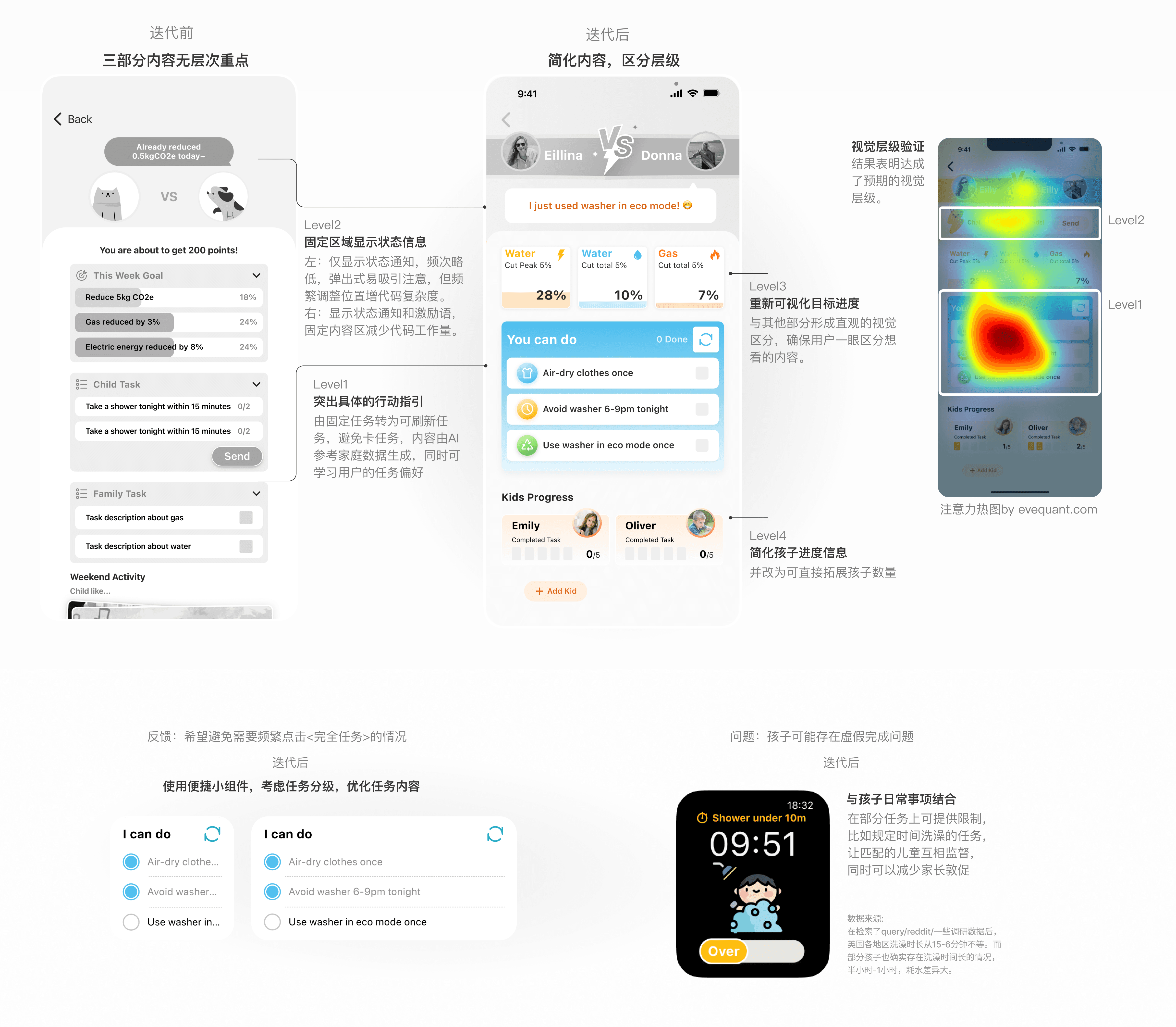
最终界面设计
最终界面设计
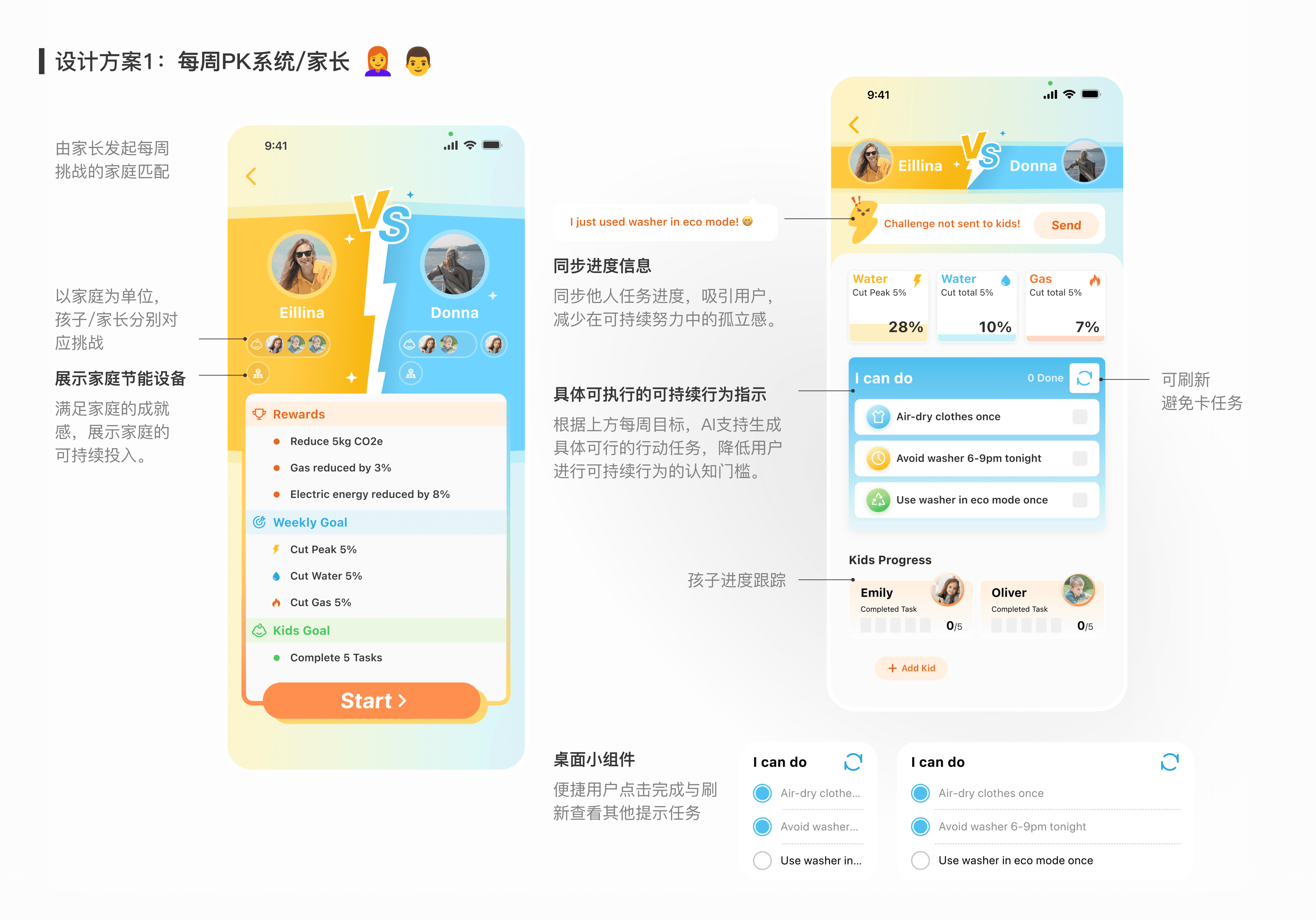
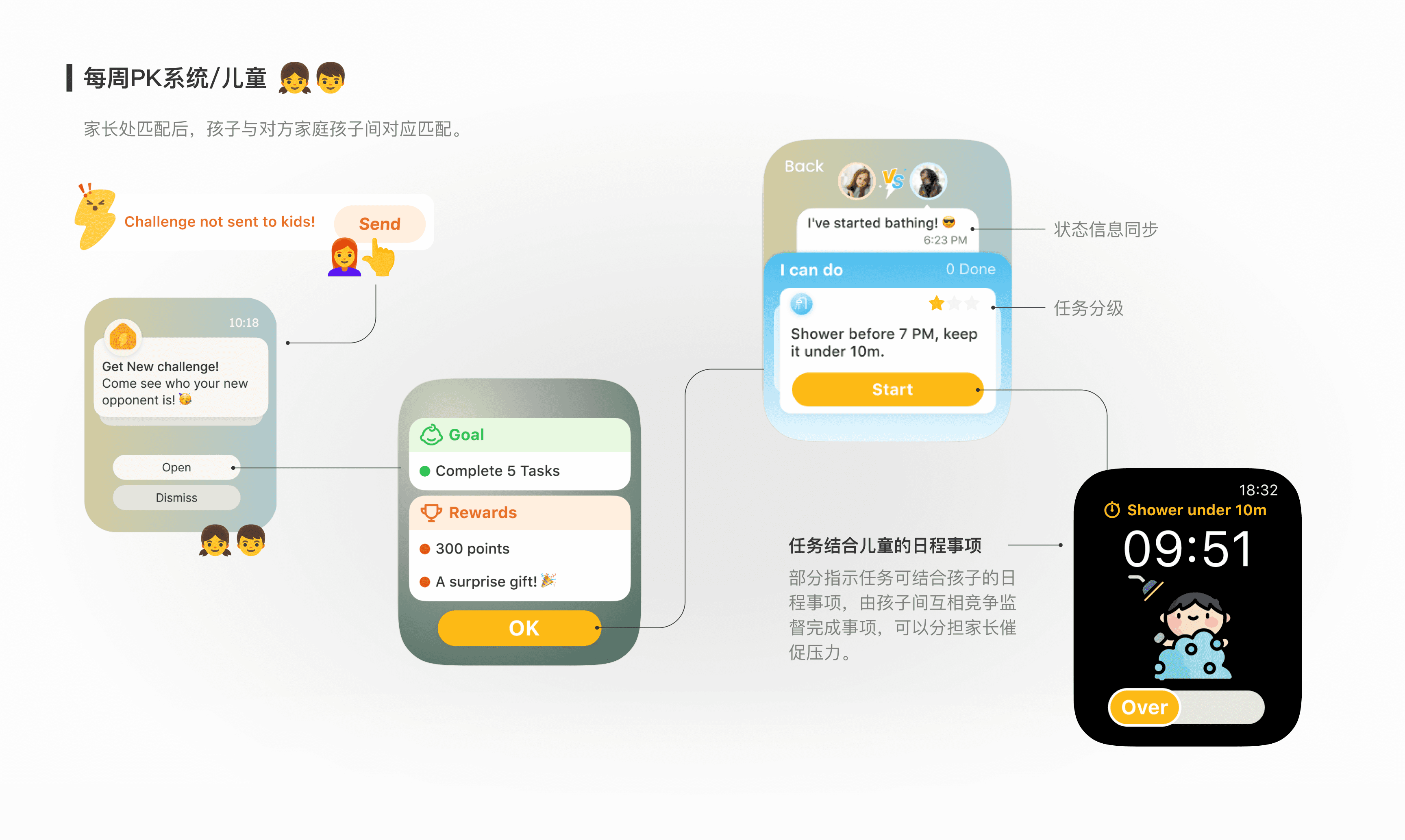
由于时间有限,我主要完成了每周日常挑战系统的设计。但周末活动作为目标家庭日程重要部分,我也进行了界面功能流程梳理。
由于时间有限,我主要完成了每周日常挑战系统的设计。但周末活动作为目标家庭日程重要部分,我也进行了界面功能流程梳理。
通过分析用户资料,我发现该家庭重视与家人朋友的时光,周末活动对他们来说非常重要。但安排合适的周末活动需要花费时间精力选择,去兼顾孩子和家庭的需求。因此,为他们设计适合家庭的周末亲子活动,或许是一个引入可持续实践的机会。
通过分析用户资料,我发现该家庭重视与家人朋友的时光,周末活动对他们来说非常重要。但安排合适的周末活动需要花费时间精力选择,去兼顾孩子和家庭的需求。因此,为他们设计适合家庭的周末亲子活动,或许是一个引入可持续实践的机会。
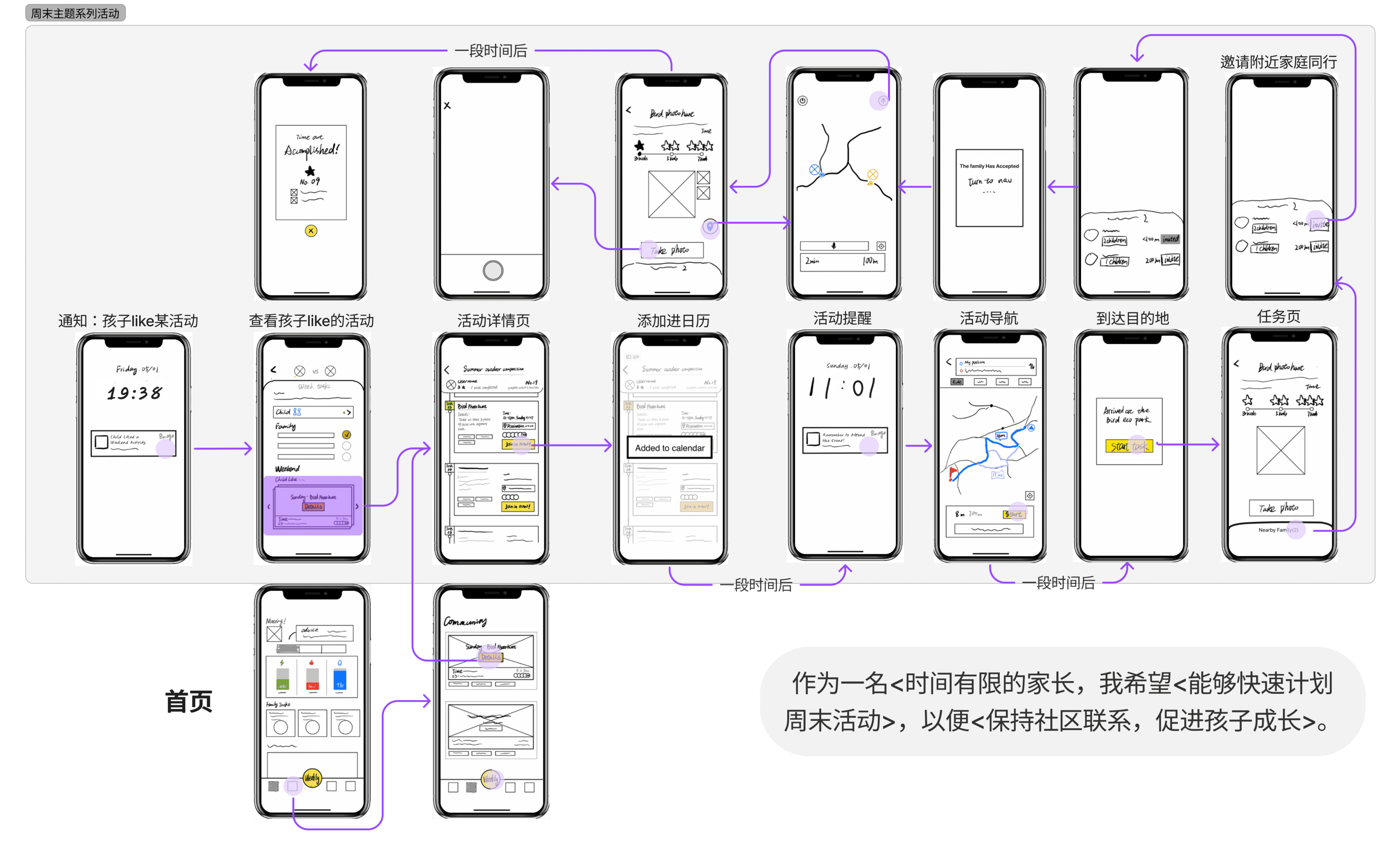
这部分最初我参考了类似’城市寻宝‘活动的案例,但目前认为APP介入过多,在用户投入活动中、与其他人互动的情况下,这或许造成负担,因此如果后续继续迭代,我会考虑如何简化。
这部分最初我参考了类似’城市寻宝‘活动的案例,但目前认为APP介入过多,在用户投入活动中、与其他人互动的情况下,这或许造成负担,因此如果后续继续迭代,我会考虑如何简化。
设计思考
未来迭代方向
与真实目标用户进行测试
将现有设计结果与目标用户进行测试。就其余部分如’什么样的奖励内容是有吸引力的对于家长与孩子‘从用户处收集信息。
将现有设计结果与目标用户进行测试。就其余部分如’什么样的奖励内容是有吸引力的对于家长与孩子‘从用户处收集信息。
继续梳理周末活动流程
简化周末活动的界面流程,减少APP的介入,确保在实际活动中不给用户增加操作APP的负担。
简化周末活动的界面流程,减少APP的介入,确保在实际活动中不给用户增加操作APP的负担。
完善其余界面设计
补充其余未完成的界面设计,产出整个APP的原型以进行整体的用户测试。
补充其余未完成的界面设计,产出整个APP的原型以进行整体的用户测试。
设计思考
产品反思
什么会导致失败?
什么会导致失败?
如何应对?
如何应对?
当地亲子家庭的数量没有达到预期,不足以支持匹配竞赛和排名
当地亲子家庭的数量没有达到预期,不足以支持匹配竞赛和排名
首先调查当地的亲子家庭数量是否足够与意愿,然后再推出应用程序
首先调查当地的亲子家庭数量是否足够与意愿,然后再推出应用程序
AI提供的日常可持续任务与用户完成意愿相差大,缺乏吸引力。
AI提供的日常可持续任务与用户完成意愿相差大,缺乏吸引力。
启动应用程序试点,并监控用户使用它时的任务完成数。
启动应用程序试点,并监控用户使用它时的任务完成数。
奖励内容对孩子和家长没有吸引力
奖励内容对孩子和家长没有吸引力
在对用户兴趣进行研究后,对奖励进行分类。使用A/B测试来评估不同奖励的行为结果。
在对用户兴趣进行研究后,对奖励进行分类。使用A/B测试来评估不同奖励的行为结果。